Drug Transport Requirements in Saudi Arabia: What the SFDA Expects From Your Carrier
A summary of the transport requirements in the SFDA Good Storage and Distribution Practices guideline: contracts, vehicle equipment, temperature and humidity monitoring, records and returns, plus a checklist of questions to ask a carrier.
By BaridX Team5 min read
If you move medicines or medical supplies inside Saudi Arabia, choosing a transport company is more than an operational decision. The Saudi Food and Drug Authority (SFDA) treats transport as part of the product's storage chain, and a weak link there can get a shipment rejected or destroyed, even if it arrived on time.
This guide summarizes what the SFDA expects during transport, and what to check with a carrier before you hand over your shipment.
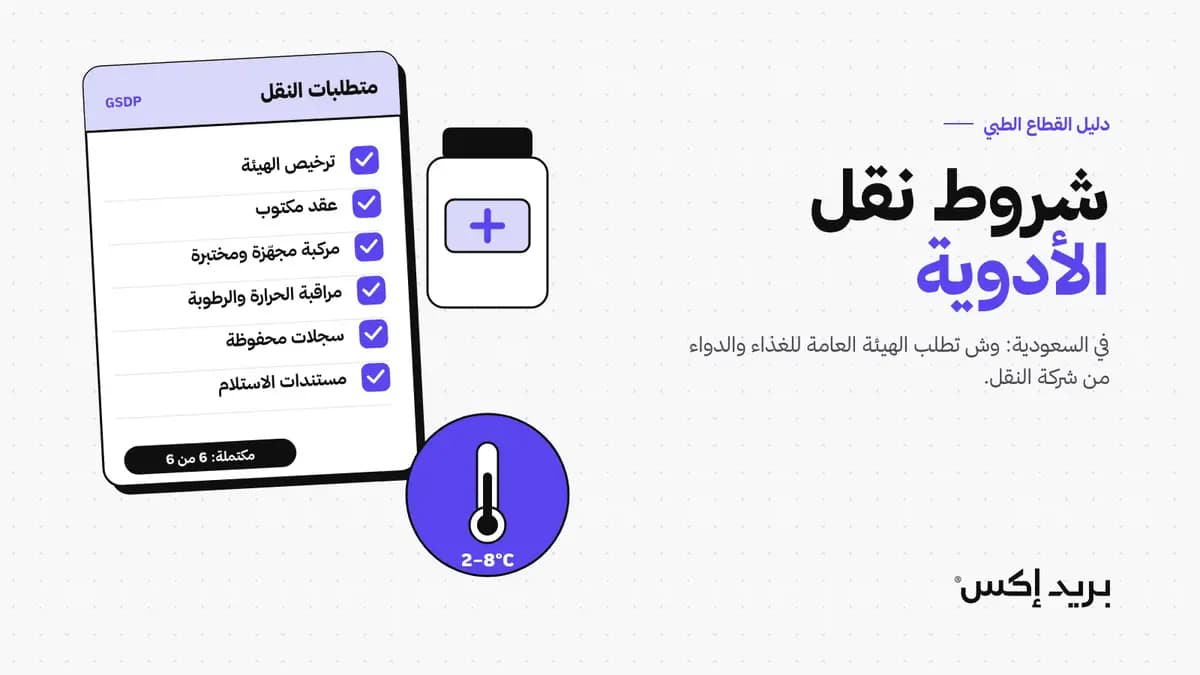
Note: this is a simplified summary of the transport-related points in the SFDA Guideline of Good Storage and Distribution Practices (GSDP). The official reference is the guideline itself, last updated in February 2024.
Who regulates drug transport in Saudi Arabia?
The SFDA does. Its Good Storage and Distribution Practices guideline sets how medicines are stored, transported and delivered, from the manufacturer or agent to the hospital, pharmacy or warehouse.
One point is clear in the guideline: if you contract an external transport company, that company must comply with the same requirements, and its equipment must meet them. Your responsibility does not end when the driver takes the shipment.
1. A written contract with the carrier
The guideline requires a written contract with any third-party carrier, covering how the shipment is protected and how records are kept. Medicines may only be supplied to licensed entities.
Before you sign, ask the carrier about its licenses. BaridX holds a license from the Ministry of Transport and a license from the SFDA.
2. A vehicle equipped for the product
Vehicles must have the capacity and equipment the product category needs, and must prevent conditions that could affect quality. Points the guideline mentions:
- Temperature and humidity devices are placed at the locations and heights set by the vehicle's approved temperature mapping.
- Vehicles or equipment that are not fit for use are labeled and taken out of service.
- If dry ice is used, it must not touch the medicine directly.
So a truck being "refrigerated" is not enough. It has to be equipped and tested so the temperature is the same in every corner of the cargo box.
3. Temperature and humidity monitored from loading to delivery
This is the most important point in transport. Monitoring devices must run from dispatch until the shipment arrives, be calibrated regularly, and be linked to the dispatch and receiving records.
The guideline also asks for data showing the manufacturer's storage conditions were met. A promise is not enough; you need records.
Ask any carrier: is temperature and humidity recorded for the whole trip? Can I see it during the trip, or at least receive a full report after delivery?
4. Records kept and ready for inspection
Temperature and humidity records must be kept for the product's shelf life plus one year, and be available if the SFDA asks for them during an inspection.
If your carrier cannot give you a record for every trip, you are the one who faces the question at inspection.
5. Handling deviations
If storage conditions are breached, the guideline requires informing the relevant parties (agent, distributor or recipient) and consulting the manufacturer. There must also be a written procedure for investigating temperature deviations.
The better outcome is that deviations never happen. That depends on preparing the truck before loading and monitoring it all the way.
6. Dispatch and receiving documents
Every shipment needs dispatch and receiving records with the date, the sending and receiving parties, the carrier's name if third-party, the batch number, and signatures.
At NUPCO warehouses in particular, documents must be ready and reviewed before arrival, because anything missing can delay or cancel the receipt.
7. Returns
Returned products require a written contract, and a qualified person evaluates them after reviewing the temperature and humidity records of the return trip. They are segregated and kept under their required conditions until a decision is made.
The return trip needs the same care and the same records.
Quick checklist: questions to ask your carrier
- Do you hold an SFDA license?
- Are your trucks fitted with temperature and humidity sensors, with a data logger in every shipment?
- Can I track the shipment live, including location and temperature?
- Will I receive a full trip report after delivery?
- Do you review documents before the truck leaves?
- Do you have a representative who attends the receipt at NUPCO warehouses?
- How do you handle returns?
How BaridX handles pharmaceutical transport
We built our medical transport service around these same requirements:
- Licensing: a Ministry of Transport license and an SFDA license.
- Fleet: more than 100 refrigerated and frozen trucks fitted with temperature and humidity sensors.
- Recording: a data logger travels with every shipment, and after delivery you receive a report covering every second from loading to unloading.
- Live tracking: from your company portal you see the truck's location, the temperature and humidity readings, and even a live camera on the cargo.
- NUPCO: we deliver to every NUPCO warehouse in the Kingdom, and review the pallet and documents before the truck leaves. Our first-time acceptance rate is 100%.
Learn more about our NUPCO delivery service, or read our guide on cold-chain pharma transport and how to prove the chain never broke.
FAQ
Does a drug transport company need an SFDA license? The guideline requires that medicines go only to licensed entities, and that any contracted carrier complies with its requirements. Choosing an SFDA-licensed carrier reduces your risk at inspection and at receipt.
How long must temperature records be kept? Under the guideline, for the product's shelf life plus one year.
Is a refrigerated truck enough? No. Temperature must be monitored and recorded from loading to delivery, with calibrated devices placed according to the vehicle's temperature mapping.
Can I track a pharmaceutical shipment with BaridX? Yes. From your company portal you track the truck's location, temperature and humidity, see the cargo on camera, and receive a full report after delivery.
Do you transport medicines between cities? Yes. We cover the Kingdom's regions, including Riyadh, Qassim, Al Jouf, Al Baha, Jeddah, Madinah, Dammam, Abha, Khamis Mushait and Jazan.
- نقل الأدوية
- شروط نقل الأدوية
- الهيئة العامة للغذاء والدواء
- نقل مبرّد
- نُبكو
- سلسلة التبريد